
How to Properly Fund an IRA LLC or Trust Step by Step
by Peter Rizzo
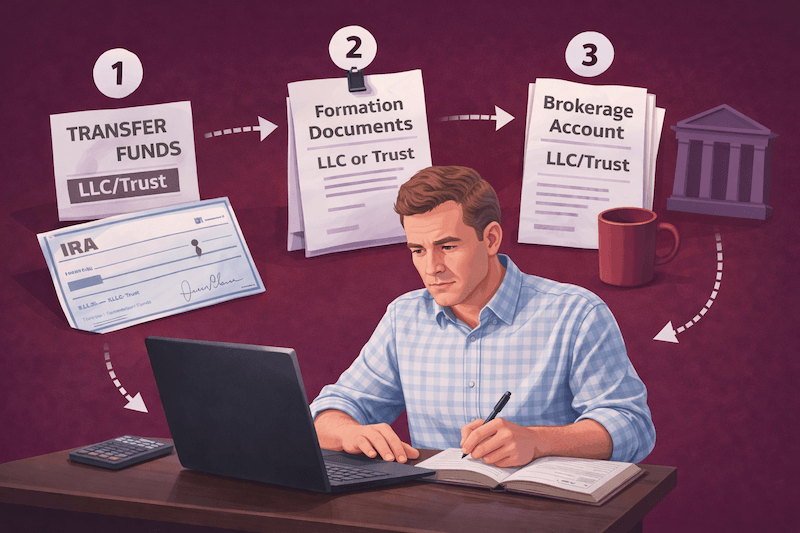
Funding an IRA LLC or Trust is the step that connects your retirement account to your investment structure. This is where many errors happen, usually from moving too quickly or skipping details in titling and documentation. When done correctly, the process is straightforward and sets the foundation for everything that follows inside the account.
The starting point is a Self-Directed IRA with a custodian that supports alternative assets. The IRA must be fully established before any funding moves into an LLC or Trust. At this stage, the account can be funded through a rollover, a transfer from another IRA, or a new contribution. The funds remain with the custodian until the entity is ready.
Once the IRA is in place, the next step is forming the LLC or Trust. The structure must be created with language that reflects IRA ownership. The IRA is listed as the member of the LLC or the beneficial owner of the Trust. The account holder is named in a managerial or trustee role that allows administrative control without changing ownership.
After the entity is properly formed, the IRA invests into the LLC or Trust. This is done through a capital contribution or subscription that moves funds from the IRA to the entity. The custodian processes this step based on submitted documents, which typically include the operating agreement or trust document, the investment direction form, and any required supporting materials.
Once the funding is approved, the funds are transferred into the bank account of the LLC or Trust. Opening this bank account requires careful attention to titling. The account must be opened under the name of the entity, and the ownership must trace back to the IRA. Banks may request formation documents, an EIN, and verification of the manager or trustee authority.
With the bank account funded, the entity is ready to operate. All future investments are made through this account. Income flows back into it, and expenses are paid from it. The IRA remains the owner of the entity, and the entity holds the assets.
Proper documentation should be maintained throughout the process. This includes copies of formation documents, funding confirmations, bank records, and any agreements related to investments. Keeping everything organized supports both compliance and future reporting.
Timing also matters. Funding should occur only after the entity is fully established and correctly titled. Sending funds too early or using temporary structures can create confusion in ownership records. Taking a structured approach ensures that each step aligns with the overall design of the account.
Summary
Funding an IRA LLC or Trust involves establishing the Self-Directed IRA, forming the entity with correct ownership language, transferring funds from the IRA into the entity, and setting up a properly titled bank account. When each step is handled carefully, the structure operates smoothly and provides a solid base for managing investments inside a retirement account.