How to Balance Growth Investments and Income Investments Inside One IRA
by Peter Rizzo
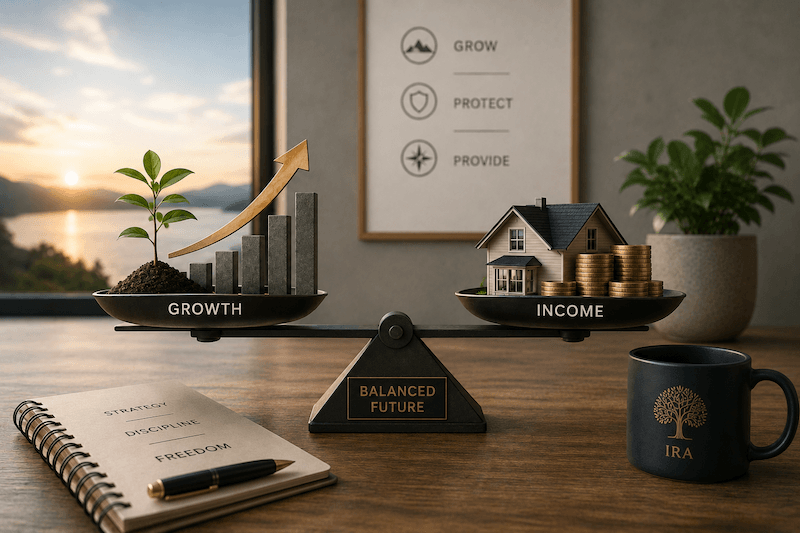
A Self-Directed IRA can hold many different types of investments, but the strongest portfolios usually have a clear balance between growth and income. Growth investments can increase long term value, while income investments can provide cash flow, liquidity, and stability. When both are used thoughtfully, the account becomes more flexible and better prepared for changing market conditions.
The right balance depends on the investor’s goals, age, risk tolerance, time horizon, and need for future distributions. A younger investor may focus more heavily on appreciation. An investor approaching retirement may place more value on recurring income and capital preservation. Most accounts benefit from some combination of both.
Understand the Role of Growth Investments
Growth investments are usually selected for long term appreciation. These may include real estate development, private equity, early stage companies, land, or assets expected to increase in value over time.
Inside an IRA, growth investments can be powerful because gains remain within the retirement account structure. In a Traditional IRA, growth can accumulate tax deferred. In a Roth IRA, qualified growth can eventually be tax free.
Growth investments often require patience. They may produce little income in the early years, and the return may depend on a future sale, refinance, or liquidity event. This can work well when the account has enough time and cash reserves to support the holding period.
Understand the Role of Income Investments
Income investments are selected for recurring cash flow. These may include rental properties, promissory notes, private lending, income funds, or stabilized real estate investments.
Income helps the IRA stay flexible. It can be used to cover expenses, build reserves, or fund future investments. Predictable cash flow can also reduce the need to sell assets during unfavorable market conditions.
For investors closer to retirement, income may become increasingly important because the account may eventually need to support distributions.
Match the Balance to the Account’s Stage
The balance between growth and income should evolve over time. During the accumulation stage, investors often have more room to pursue long term appreciation. As retirement gets closer, the account may need more stability and cash flow.
A simple way to think about the shift is through stages. Early-stage accounts may prioritize growth. Mid-stage accounts may blend growth and income. Later-stage accounts often benefit from stronger income and liquidity planning.
The structure does not have to change suddenly. Small adjustments over time can gradually move the portfolio toward the right balance.
Watch for Liquidity Pressure
A portfolio with too much growth exposure can look strong on paper while still creating cash flow problems. Illiquid assets may take years to mature, and expenses can still appear during the holding period.
Income investments help reduce that pressure by keeping money moving inside the account. They can provide funds for property expenses, administrative costs, capital calls, or new opportunities.
A healthy IRA portfolio usually considers both expected return and available cash.
Avoid Overloading One Side
Too much growth can create liquidity risk. Too much income can limit long term appreciation. The goal is to create a mix that supports the investor’s retirement plan.
A portfolio may become too growth-heavy when most assets depend on future exits and little cash is available for expenses. It may become too income-heavy when nearly all capital is placed in lower-growth assets and the account loses long term upside.
Balance does not require perfect allocation. It requires awareness of how each investment affects the account as a whole.
Use Income to Support Growth
Income and growth can work together inside one IRA. Cash flow from notes, rentals, or income funds can help support longer-term investments that need time to mature.
This can make growth investments easier to hold through market changes. Instead of relying on a forced sale or outside funding, the IRA has internal cash flow to maintain flexibility.
Over time, reinvested income can also become a source of new growth.
Review the Portfolio Regularly
The balance between growth and income can change without any new investment decisions. Appreciation, paydowns, distributions, and market changes can shift the portfolio over time.
A regular review helps investors understand where the account stands. Useful questions include:
- How much of the account is producing income?
- How much depends on future appreciation?
- Are reserves strong enough for expenses or delays?
- Are any assets becoming too large relative to the portfolio?
- Does the current mix still match retirement goals?
This review helps keep the portfolio aligned with the investor’s long term plan.
Consider the Account Type
Traditional IRAs, Roth IRAs, CheckBook IRA LLCs, CheckBook IRA Trusts, and Solo 401(k)s can all hold different combinations of growth and income investments. The account type may influence how investors think about tax treatment, leverage, distributions, and long term strategy.
For example, growth assets may be especially attractive inside a Roth structure when the holding period is long and the upside is meaningful. Income assets may be helpful in any structure because they support liquidity and compounding.
The best mix depends on how the account fits into the investor’s broader retirement plan.
Summary
Balancing growth and income investments inside one IRA helps create a portfolio that can grow over time while still maintaining cash flow and flexibility. Growth investments provide long term upside, while income investments support liquidity, reserves, and ongoing stability. A thoughtful mix can help the account stay resilient across market cycles and better aligned with the investor’s retirement goals.