
Questions to Ask Before Making Any IRA Investment
by Peter Rizzo
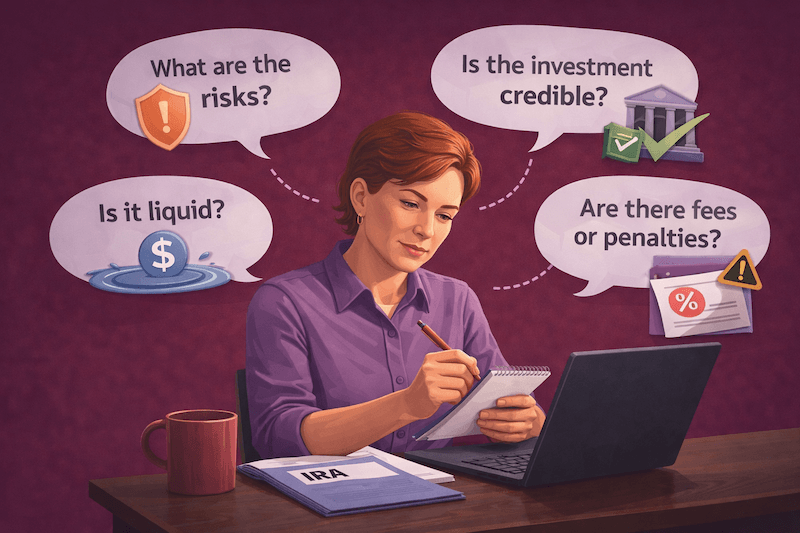
Every investment inside a Self-Directed IRA carries more than just financial risk. It also carries structural and compliance considerations that do not exist in a regular taxable account. Before committing funds, taking the time to ask the right questions can prevent issues that are difficult to fix later.
The goal is to understand not only the investment itself, but also how it fits within the rules and limitations of a retirement account.
The first question to consider is whether the investment is allowed under IRA rules. Most assets are permitted, but the way they are structured matters. Understanding how the deal is set up, who the parties are, and how ownership is documented helps confirm that the investment can sit cleanly inside the account.
The next area to review is the relationship between the investor and the parties involved. Any connection to disqualified persons can create problems. This includes family members, controlled businesses, and certain professional relationships. Even indirect involvement can affect compliance, so it is important to map out all relationships before proceeding.
Another key question involves how the investment generates returns. Knowing whether income is passive or tied to business activity helps determine how it will be treated for tax purposes. Investments that involve active operations or frequent transactions may introduce additional considerations that need to be evaluated ahead of time.
Liquidity should also be part of the decision process. Some investments lock up capital for extended periods. Understanding how and when funds can be accessed, along with any expected distributions, helps align the investment with future needs inside the IRA. This becomes especially important when planning for expenses or required distributions later on.
Valuation is another important factor. The IRA must report fair market value, even for private or illiquid assets. Before investing, it helps to understand how the asset will be valued over time and what documentation will support those valuations. Clear valuation practices make ongoing reporting much easier.
The structure of the investment should also be reviewed carefully. This includes how the asset will be titled, how funds will move, and how income and expenses will be handled. Ensuring that everything flows through the IRA or its entity helps maintain separation from personal finances.
It is also worth asking how the investment will be managed after closing. Some opportunities require ongoing decisions, additional funding, or coordination with third parties. Understanding the level of involvement required helps determine whether the investment fits within the administrative role allowed inside an IRA.
Risk remains a central consideration. Evaluating downside scenarios, exit options, and the strength of the underlying asset provides a clearer picture of how the investment may perform under different conditions. A strong return projection should be supported by realistic assumptions.
Timing plays a role as well. Some investments depend on market cycles, while others follow fixed timelines. Aligning the timing of the investment with broader retirement goals supports consistency across the account.
Asking these questions creates a structured approach to decision making. It shifts the focus from reacting to opportunities toward evaluating them with clarity.
Summary
Making an investment inside a Self-Directed IRA involves more than selecting an asset. It requires understanding compliance, structure, liquidity, valuation, and long term fit. Asking the right questions before committing funds helps ensure that each investment supports both growth and the integrity of the retirement account.